

Archive services

Your family and your surname in historical documents

We search hundreds of volumes of printed source editions, digitise old prints in over 100 languages and scripts, from Latin and old Cyrillic to Greek, Hebrew, Arabic and Fraktur, and deliver a report in which every sentence has a source.

Prices from €15
We invent nothing. We put the facts together.

Sample reports

See what you pay for

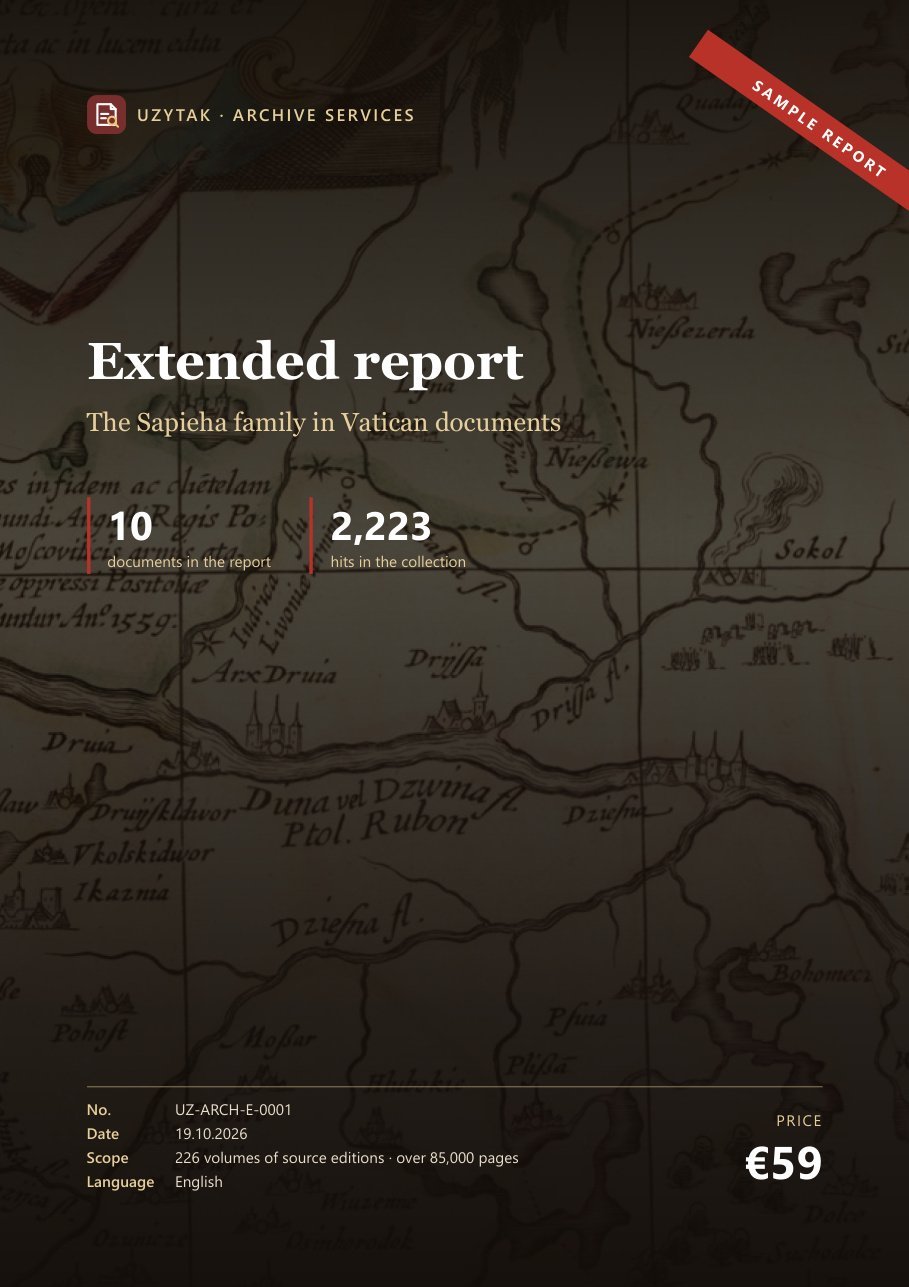
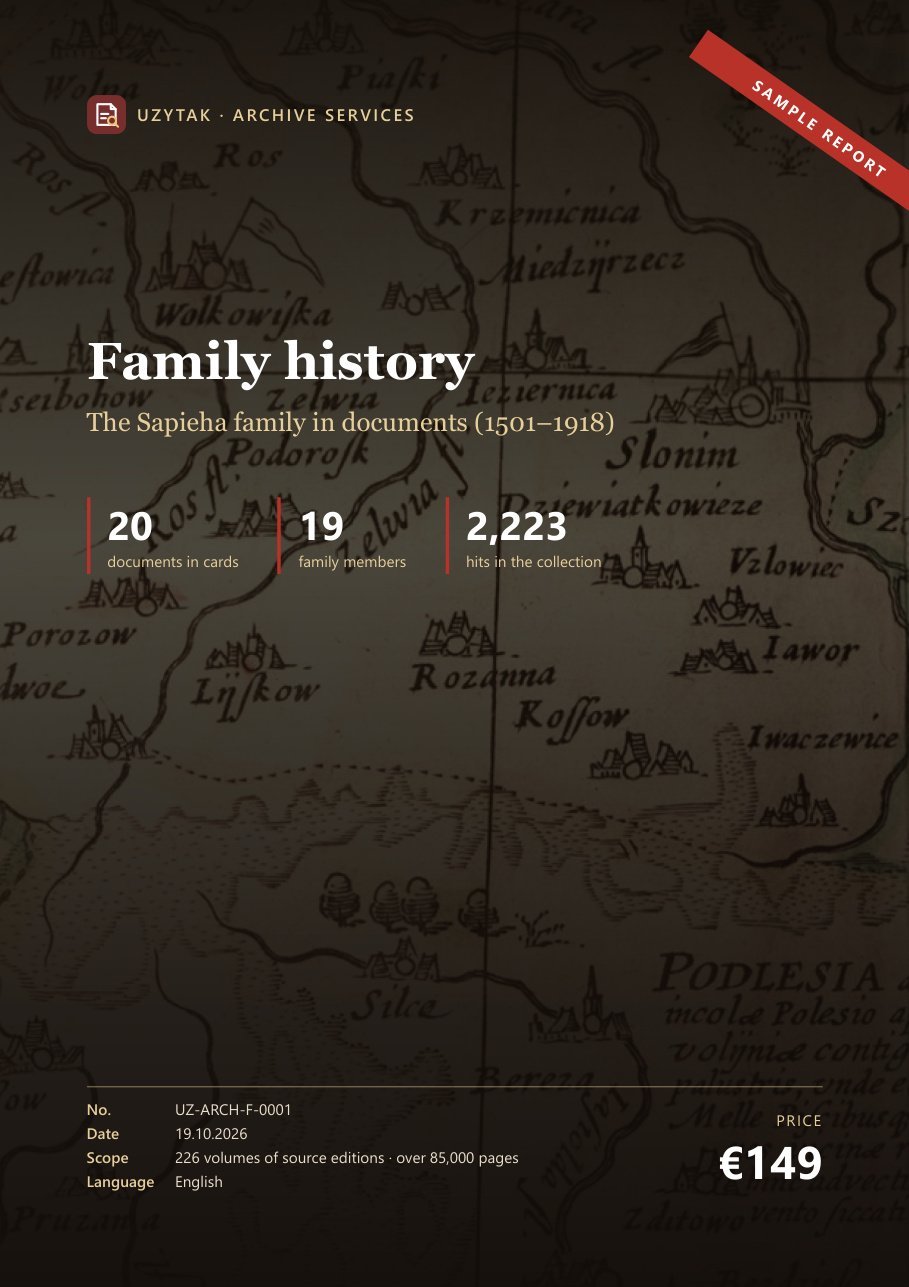
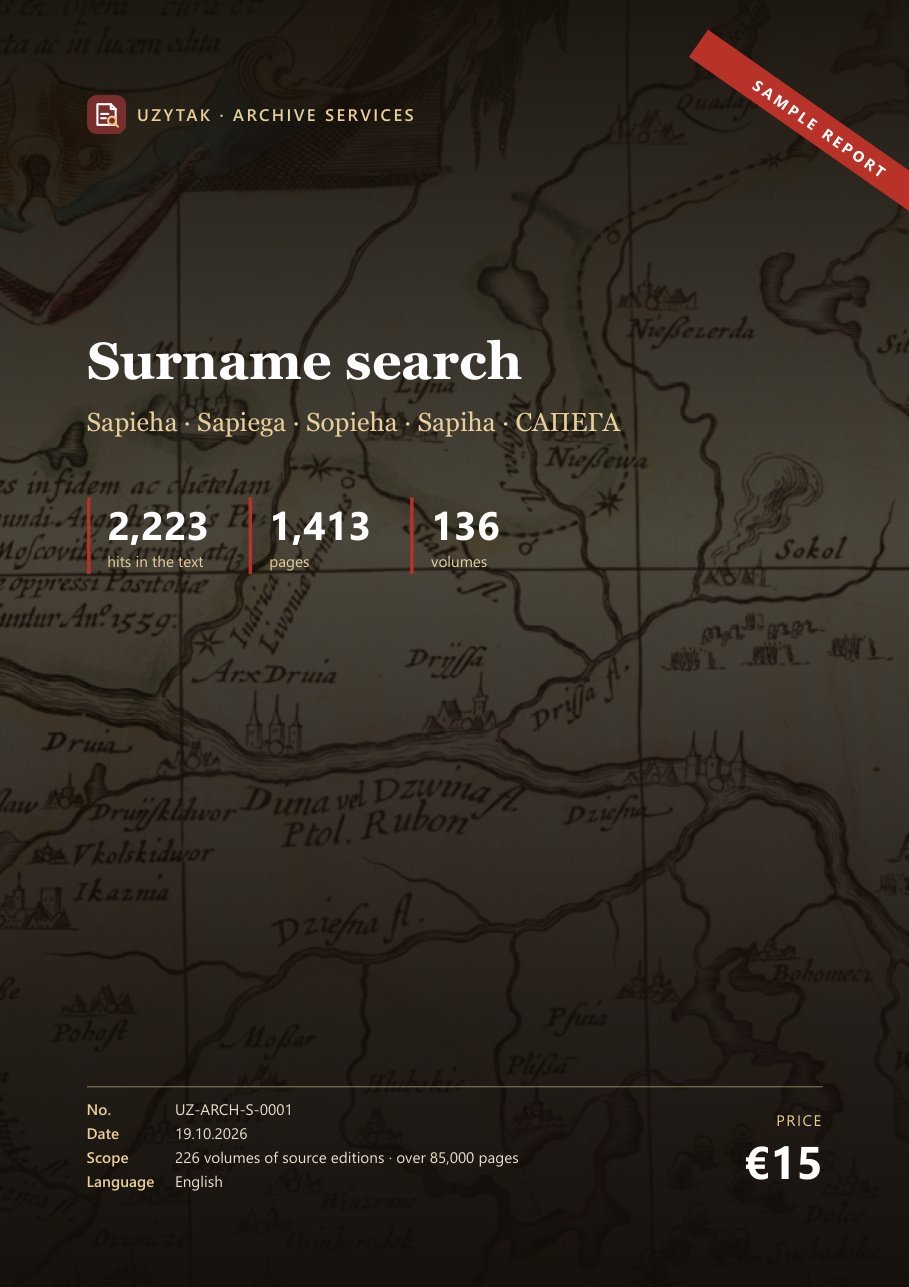
Three real reports on the Sapieha family, made by our system on the same sources we search for clients: from a surname search, through an extended report, to a full family history.

What we work with

UZYTAK's own system for historical sources

Our software turns scans of old books into searchable text, finds every mention of a place or person and checks every quote against the source page. That is how we built the interactive map of documents of the Grand Duchy of Lithuania.

  • 226 volumes, over 85,000 pages of source editions from the Vatican archives and other archives, recognised and processed by our software.
  • About 1,250 documents linked to places, with date, author, archive shelfmark and page.
  • Map of documents every town of the Grand Duchy with letters from the Vatican on historical maps: vkl.uzytak.com

Examples of our work

This is what you get

Open the map of documents
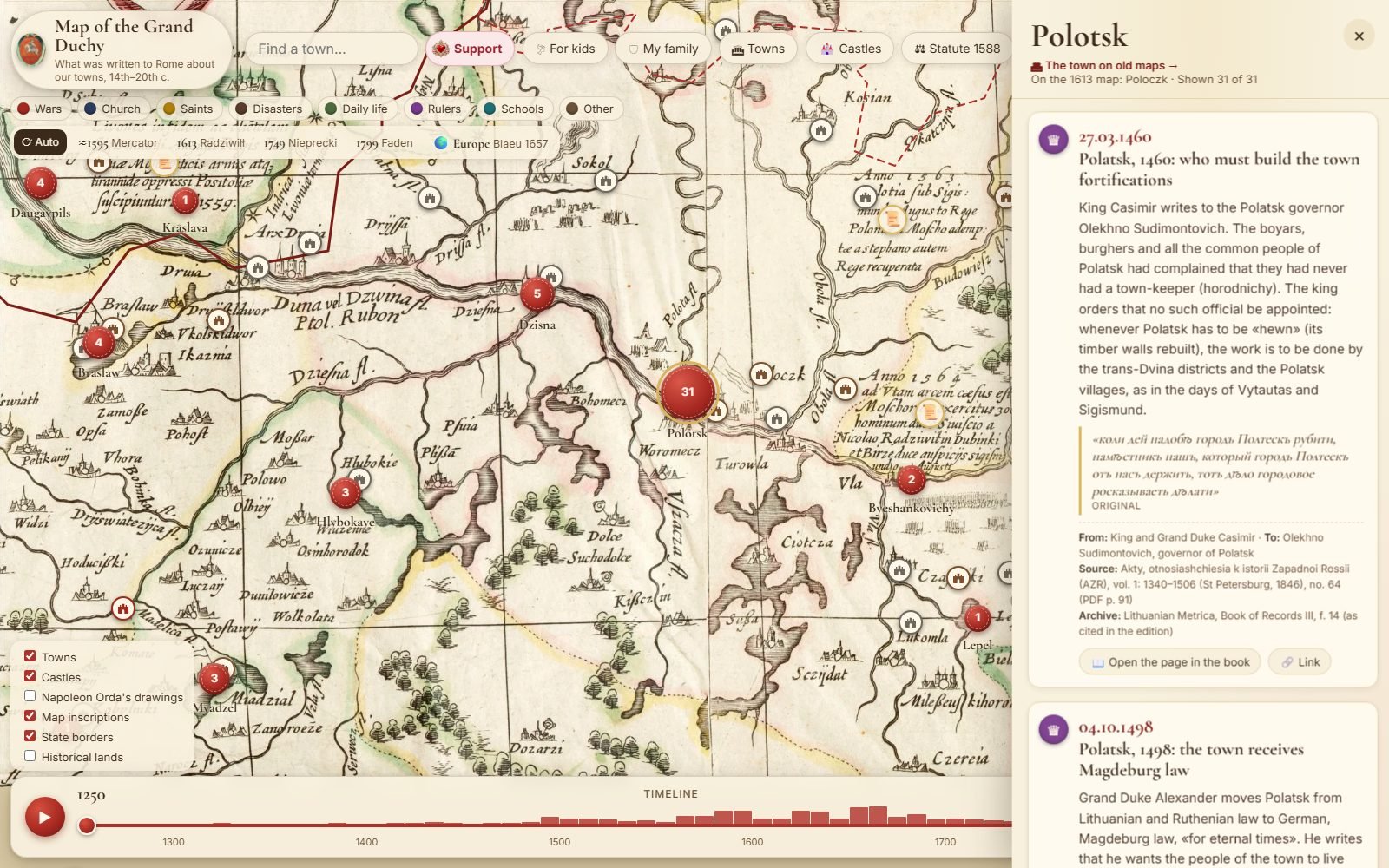
Map of documents: every town with its letters and their sources. Here: Polotsk.
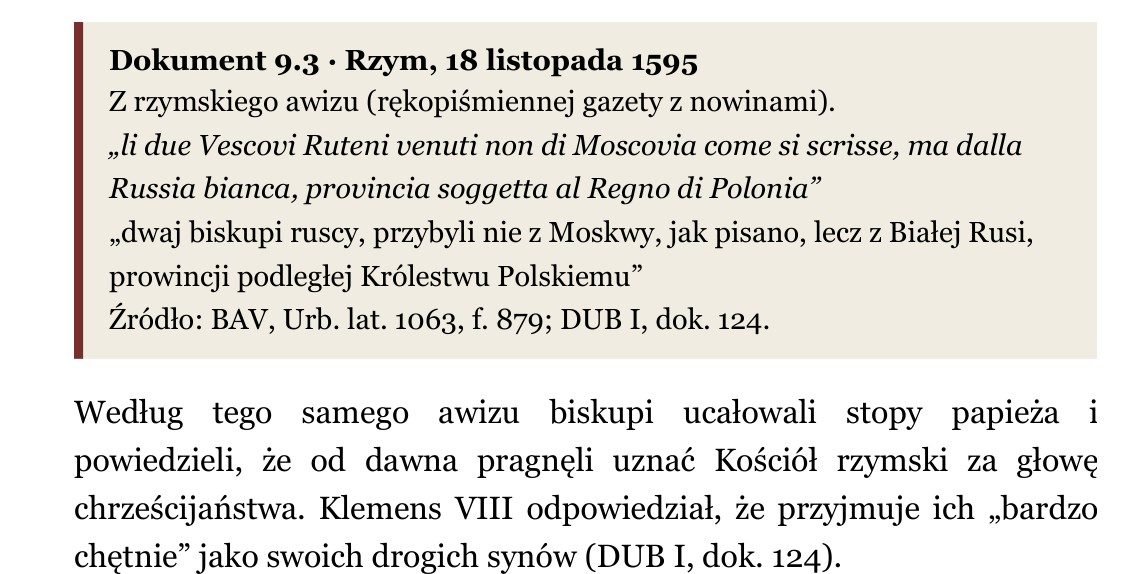
Report extract: a document with the original quote, translation and archive shelfmark.
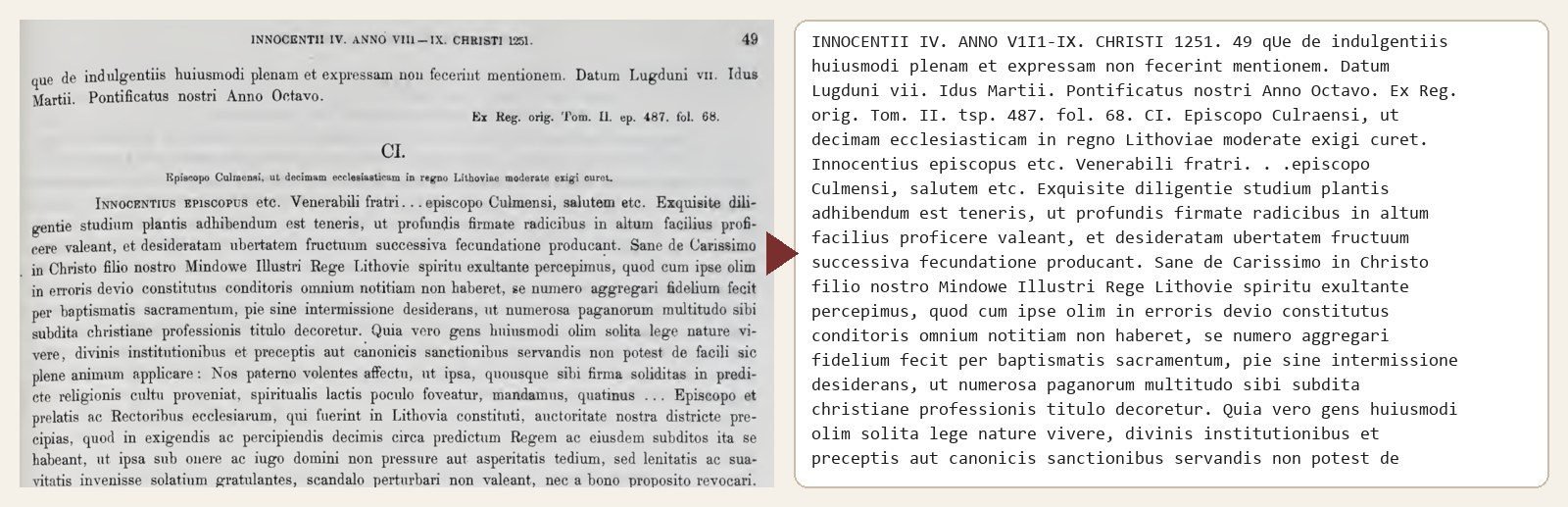
An 1860 scan and the recognised text, ready to search.
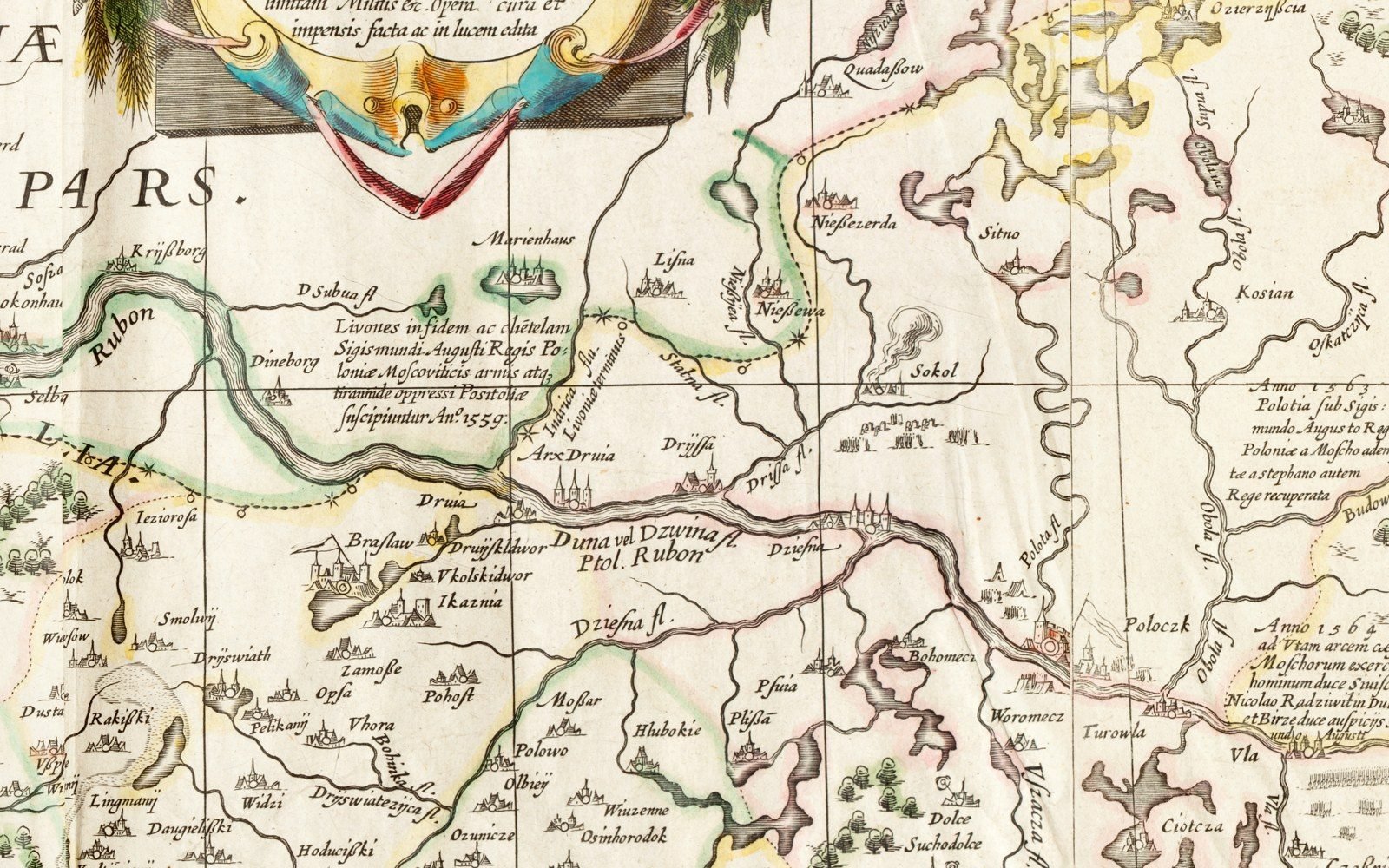
Public-domain historical maps in reports: Polotsk on the 1613 map.

Services and prices

Choose what you need

Prices are shown up front. Before we start you get an exact quote and deadline; you pay only after you accept it.

02

Extended report

The search plus cards of the key documents: who wrote, to whom, about what, with translated extracts and a short commentary. A print-ready PDF.

from €59 per report

When you want to understand what the documents say about your family or place.

See a sample (PDF)
Order
03

Family history

All significant documents about your family in our collection, in chronological order: cards with quotes and translations, a timeline, an index of family members, historical maps of places linked to the family and the source of every sentence.

from €149 per family

For families who want to discover and preserve their history.

See a sample (PDF)
Order
04

Digitising old books (OCR) with search

Send scans or PDFs. You get a searchable PDF and text, plus an index of places and surnames. Over 100 languages and scripts: Latin, Polish, German (incl. Fraktur), old Cyrillic, Greek, Hebrew, Arabic and more.

from €0.15 per page of roman type; €0.30 Fraktur and old Cyrillic; minimum €15

For researchers, libraries, parish archives and publishers.

Order
05

Translation of historical extracts

From historical and modern languages (Latin, Greek, Italian, German, old Ruthenian and others) into English, Polish, Belarusian, Ukrainian or another language you need. Working translation, not certified.

from €5 per extract up to 600 characters; €12 per 1,800-character page

For reports, articles and information boards.

Order
06

Family book

24–32 pages: a family history based on documents, quotes with sources, historical maps and public-domain illustrations, print-ready PDF layout and an e-book. A beautiful gift for an anniversary or family reunion. Printing is quoted separately.

from €890 per book

For an anniversary, a family reunion, a gift for your loved ones.

Order

Prices in euro, final. Searches and reports cover printed source editions in our collection and the materials you send us.

How our system works

Not a chat. A processing line for historical sources.

  1. Recognition. Scans go through page-by-page text recognition with models for over 100 languages and scripts; historical spellings are normalised.
  2. Indexing. The whole collection, over 85,000 pages, goes into a full-text index. A gazetteer knows historical name variants: Polotsk is also Polocia, Poltosko, Polozco.
  3. Retrieval and filtering. The system finds every hit with its context and discards false ones: Brest in France, “Mir” as a first name.
  4. Analysis. AI models work as archivist's assistants: they read the hits and draft a document card: date, who writes to whom, about what, shelfmark.
  5. Verification. A separate stage checks every quote against the text of the edition's page. Anything that can't be confirmed stays out of the report.
  6. Report. A generator builds a PDF in which every sentence has its source.

Neural networks are our assistants and archivists. The result is secured by processing software, the index, rules and the verification of every quote. That is why you get a complete, checked report with sources, not a chat answer.

How it works

Four steps, no surprises

  1. 1. Tell us what you are looking for. A surname, a place, a period, or files to digitise.
  2. 2. Get a quote and a deadline. Usually within 1–2 working days; if our collection has nothing, we say so at once and you pay nothing.
  3. 3. Pay and wait a few days. Simple searches usually take 3 working days, reports and OCR usually up to 2 weeks.
  4. 4. Receive your PDF. Every sentence with its source: edition, page and, where known, archive shelfmark.

Honestly: what we don't do

  • We do not carry out searches in archives in Belarus or order copies there.
  • We do not provide sworn (certified) translations.
  • Rare scripts and manuscripts: first a free one-page test, then a quote.
  • We add nothing: if the sources are silent, the report says so.

Order

Tell us what you are looking for and we will send a quote

The form opens your email app with a ready message. You can also write directly: support@uzytak.com